
You placed a cashmere order with a middleman, paid upfront, and waited 12 weeks. The scarves arrived. The quality was inconsistent. Half went straight into a markdown bin.
If you’re sourcing cashmere for a fashion brand or boutique, that story isn’t rare. It’s almost a rite of passage. And it happens almost entirely because buyers don’t go directly to where cashmere actually comes from.
Nepal and India together account for a huge share of the world’s finished cashmere garments, knitwear, and accessories. The raw fiber starts in Mongolia and the Himalayas, gets spun and woven in places like Kathmandu, Ludhiana, and Amritsar, then passes through 2 to 4 middlemen before it reaches a European or American showroom. Every hand it passes through adds margin and removes accountability.
This guide cuts through that. Here’s how to source cashmere wholesale directly from Nepal and India, what to look for in a supplier, and how to protect your brand at every step.
Why Nepal and India are the right places to source cashmere
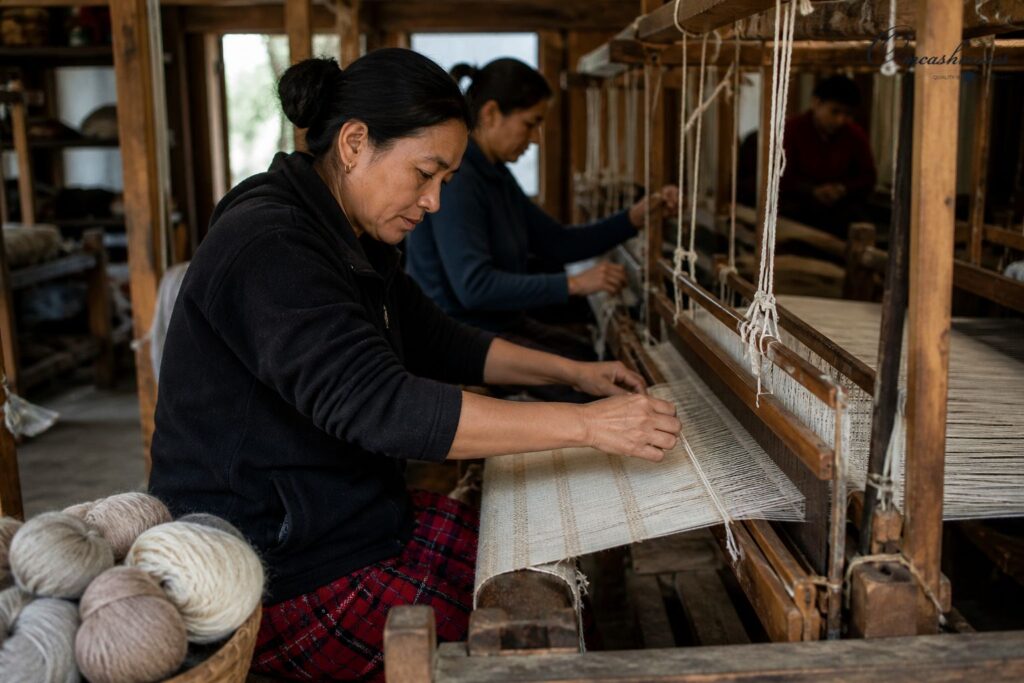
Nepal has one of the oldest cashmere weaving traditions in the world. Kathmandu’s manufacturing base has been producing pashmina and cashmere goods for export since the 1970s. Many factories there work directly with European buyers and understand quality expectations, lead times, and customs documentation.
India is bigger and more varied. The northern states, particularly Punjab and Kashmir, are where most of the Indian cashmere production happens. Ludhiana is a major knitwear hub. Kashmir’s shahtoosh and pashmina heritage is centuries old. If you want ring-spun cashmere sweaters in bulk, India has the manufacturing capacity to deliver.
Both countries offer something most importers undervalue, direct communication with the people actually making the product. When you work factory-direct, you can specify yarn grade (2-ply vs 3-ply, micron count), request custom colorways, and get fabric samples before committing to a minimum order.
Compared to sourcing through a UK or US importer, going direct typically saves 20 to 40% on unit cost at comparable quality. The tradeoff is that you’re managing the relationship yourself, so it matters who you pick.
How to find reliable cashmere wholesale suppliers
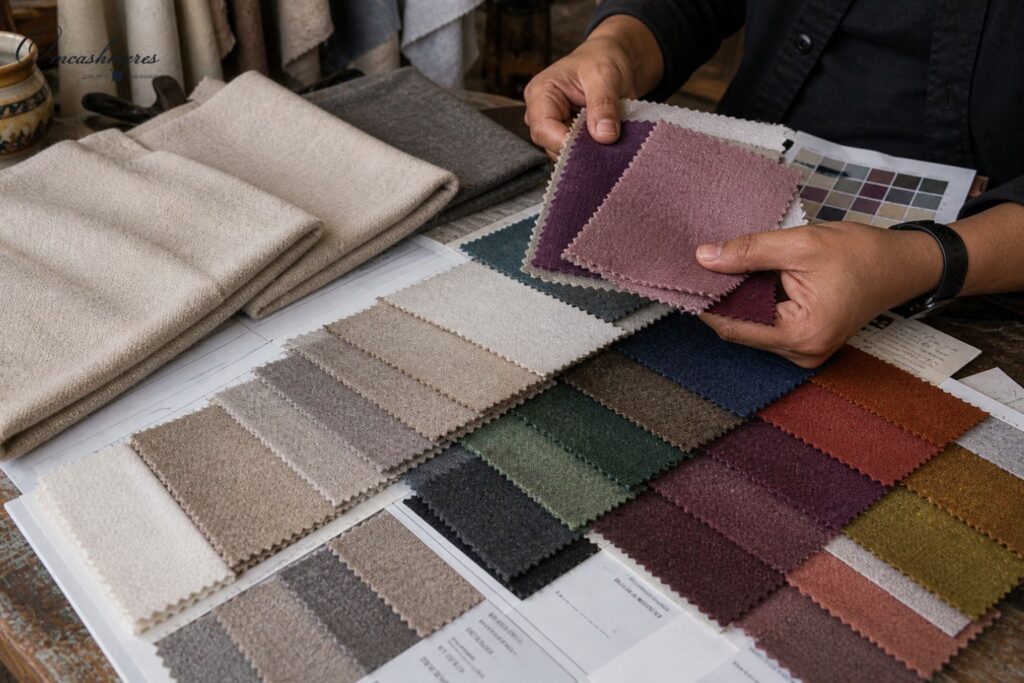
The difference between a good supplier and a bad one often comes down to 3 things: fiber grade disclosure, sample process, and references.
Start with trade directories. Platforms like Alibaba, IndiaMART, and TradeIndia list hundreds of cashmere exporters from both countries. Don’t let the volume overwhelm you. Filter by verified exporters, years in operation, and whether they export to markets in Europe or North America. Suppliers used to Western buyers know what compliance documents you’ll need.
Attend trade shows. Premiere Vision in Paris, Texworld, and the India International Garment Fair in New Delhi put you in front of actual manufacturers. Nothing replaces holding the fabric in your hand and meeting the team. If you’re serious about cashmere as a category, one trip pays for itself in avoided mistakes.
Ask for the factory, not just the company. Some manufacturers are actually traders with no production capacity.
Ask directly:
- do you own the factory?
- Can you share production photos?
- Will you allow a factory audit?
Legitimate manufacturers welcome this. Traders get uncomfortable.
Check references from buyers in your region. A supplier with 3 years of clean business with a German boutique chain is a very different risk profile from one with no traceable export history.
Om Cashmeres owns a cashmere factory and we manufacture in Nepal, which removes the guesswork for buyers who want verified sourcing without building the relationship from scratch.
What to check before placing a wholesale cashmere order
Most sourcing mistakes happen before the purchase order, not after.
- Fiber grade matters more than price: Commercial cashmere is graded by micron count. Grade A cashmere runs 14 to 15.5 microns. Grade B is 15.5 to 16.5. Above 18 microns, you start feeling the difference against skin. Ask your supplier for the micron count in writing. If they can’t or won’t tell you, walk away.
- Minimum order quantities: Nepal factories typically start at 50 to 100 pieces per style. Indian manufacturers, especially in Ludhiana, can accommodate larger runs but may push higher MOQs, sometimes 200 to 500 units. If you’re testing a new style, ask explicitly whether they’ll do a sample run at lower quantities before committing to a full production order.
- Lead times: Standard lead time from Nepal is 45 to 75 days after order confirmation. India is similar but varies by factory workload and seasonal demand. Peak order periods, typically July through September for a winter delivery, stretch timelines. Build buffer. A 60-day lead time that becomes 90 days in reality will miss your retail window.
- Yarn sourcing: Ask where the yarn comes from. The best cashmere manufacturers in Nepal and India source yarn from Mongolia or Inner China. Suppliers who can’t tell you this are either buying lower-grade fiber or don’t know their own supply chain well enough.
- Payment terms: Most factories work on 30 to 50% upfront, balance before shipment. Never pay 100% upfront on a first order. Use a letter of credit or bank transfer, not informal channels. Get every spec, colorway, and quantity in a signed purchase order before any payment moves.
Understanding certifications and quality standards
Certifications won’t guarantee quality, but their absence is a red flag.
- GI (Geographical Indication) tags: matter for Kashmiri pashmina. If you’re marketing a product as Kashmiri pashmina, it should carry the GI tag issued by the Pashmina Testing and Quality Certification Centre in Srinagar. Without it, you’re potentially selling misrepresented goods, which is a legal and brand risk in markets like the EU.
- OEKO-TEX Standard 100 certifies that a finished product is free from harmful substances. For brands selling into Germany, Austria, Switzerland, or Scandinavia, buyers increasingly expect this. Ask if your manufacturer holds this certification or can produce to OEKO-TEX standards.
- SGS or Bureau Veritas testing: For first orders from a new manufacturer, consider commissioning an independent third-party fiber test. It costs $100 to $300 and tells you definitively whether the fiber content matches what was stated. One test can save you from a warehouse full of acrylic-blended cashmere.
Nepal’s export board and India’s AEPC (Apparel Export Promotion Council) also maintain lists of registered exporters. Cross-referencing a supplier against these lists takes 10 minutes and adds meaningful confidence.
Building a long term supplier relationship that protects your brand
One good season with a supplier means little if you treat the relationship as transactional.
The factories worth working with long-term are always the ones other brands are also trying to book. If you’re a small buyer, you compete for production slots with larger clients. How you show up as a buyer determines whether you get priority.
Pay on time. Every time. Factories in Nepal and India are running on thin working capital. A delayed final payment from you cascades into delayed wages for their workers. Pay the balance when goods ship, not when you feel like it.
Give clear specs upfront. Vague briefs produce inconsistent results. If you want a specific drape weight, a Pantone color match to within 2 delta E, a particular seam finish, write it down in the tech pack. Don’t assume.
Visit once a year if you can. Even a 3-day trip to Kathmandu or Amritsar changes the relationship. You stop being an email address and become a person. Factory owners remember buyers who show up.
And when something goes wrong, handle it directly. A production defect, a color variance, a delayed shipment: raise it clearly, propose a solution, and keep the conversation professional. How you manage problems is how suppliers decide whether you’re worth prioritizing.
FAQ
What’s the minimum order quantity for wholesale cashmere from Nepal or India?
It varies by factory. Nepal cashmere manufacturers typically start at 50 to 100 pieces per style. Indian factories, especially for knitwear, often require 200 to 500 pieces. Some suppliers offer lower MOQs for sample orders to test quality before committing to full production runs.
How do I verify a cashmere supplier is legitimate before paying?
Ask for a factory audit or at minimum a video walkthrough of production. Request references from buyers in your market. Cross-check the company against India’s AEPC registry or Nepal’s Trade and Export Promotion Centre. Commission a fiber test from SGS or Bureau Veritas on your first sample. Never pay 100% upfront.
Is Nepalese cashmere better than Indian cashmere?
The quality difference comes down to fiber grade and the specific manufacturer, not the country. Nepal has a strong tradition in hand-woven and handloomed pashmina. India excels at machine-knit cashmere at higher volumes. Both can produce excellent products. Your choice should depend on the product type, order quantity, and which supplier you can verify and trust.
What import duties apply to cashmere from Nepal into the EU?
Nepal benefits from the EU’s Everything But Arms scheme, giving Nepali-origin cashmere goods duty-free access to the EU. Indian cashmere knitwear typically faces around 12% import duty. Always verify with your customs broker using the specific HS code for your product.
Can I get private label cashmere wholesale from these suppliers?
Yes. Most established manufacturers in Nepal and India offer private label production. You provide the design specs, choose yarn grade and colorways, and the factory produces under your brand. Typical lead time for private label runs is 60 to 90 days from approved samples.
Ready to Source Smarter?
Sourcing cashmere wholesale directly from Nepal and India isn’t complicated. It just requires knowing what to ask, who to trust, and how to protect yourself before money changes hands.
The brands getting the best product at the best margins are the ones treating this like a partnership, not a transaction.
Explore wholesale cashmere from verified Nepal and India manufacturers at Om Cashmeres → [email protected]